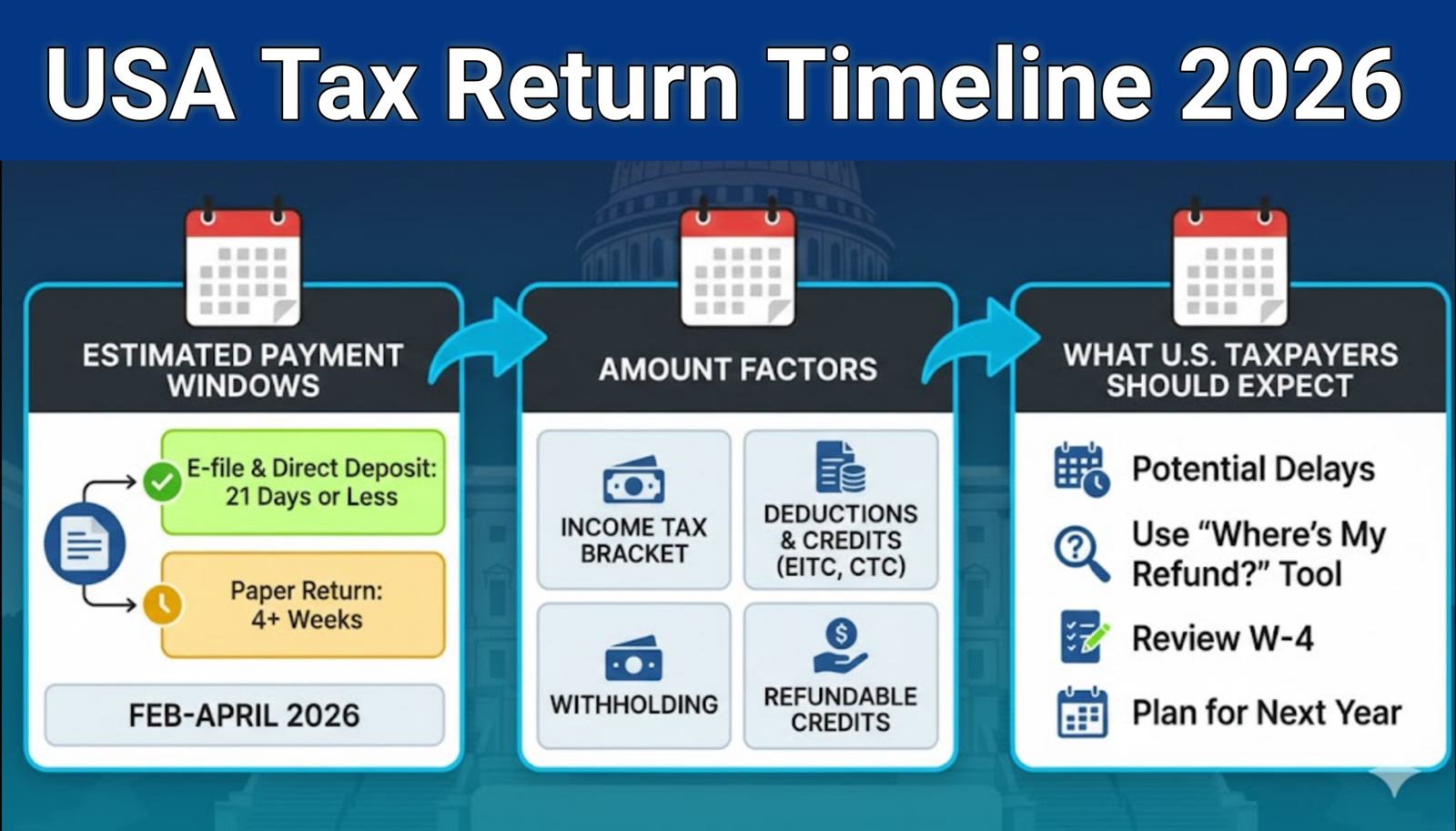
Mark your calendar! The IRS has officially announced it will begin accepting tax returns and issuing the first refunds of 2026 in late January, with the earliest direct deposits hitting bank accounts by mid-February. If you’re counting on your tax refund to cover bills or make a big purchase, knowing this exact schedule and the new rules for 2026 is critical to avoid unnecessary delays. This guide breaks down the official start date, the factors that affect your personal timeline, and how to track your payment from day one.
The Internal Revenue Service (IRS) follows a predictable annual schedule for the tax filing season. For the 2026 season (filing your 2025 tax return), the timeline is crucial due to new processing rules, especially the push for mandatory direct deposit. Understanding this schedule is the first step to getting your refund as fast as possible.
What is the Official Start Date for 2026 Refunds?
The IRS has confirmed the key date for the 2026 tax season.
- IRS Starts Accepting Returns: January 26, 2026. This is the first day the IRS will begin processing electronically filed returns.
- First Refunds Issued: The earliest direct deposit refunds will be sent starting February 6, 2026, for returns accepted on opening day.
- Paper Return Delays: If you mail a paper return, processing can take 6 to 8 weeks or more before a refund is even issued.
What is the 2026 Refund Issuance Schedule?
Your refund date depends on when you file and how you file. Here is the estimated issuance schedule:
| If Your Return is Accepted by IRS: | Estimated Direct Deposit Refund Date: |
|---|---|
| January 26, 2026 | February 6, 2026 |
| February 2, 2026 | February 13, 2026 |
| February 16, 2026 | February 27, 2026 |
| March 2, 2026 | March 13, 2026 |
| April 15, 2026 (Deadline) | April 26, 2026 |
What are the Biggest Factors That Delay Your 2026 Refund?
Even with an early filing, several factors can push your refund back by weeks:
- Claiming EITC or ACTC: By law, the IRS cannot issue refunds for returns claiming the Earned Income Tax Credit (EITC) or Additional Child Tax Credit (ACTC) until mid-February 2026. This means your refund won’t arrive until late February or early March at the earliest.
- Errors on Your Return: Simple mistakes like an incorrect Social Security number or math errors trigger manual reviews.
- Incomplete Information: Missing forms or schedules will delay processing until the IRS receives them.
- Identity Theft or Fraud Checks: If the IRS detects suspicious activity, it will hold the refund for verification.
How Can You Get Your 2026 Refund the Fastest?
Follow this proven checklist to speed up your refund:
- File Electronically: E-filing is the fastest, most accurate method. Avoid paper returns.
- Use Direct Deposit: This is now the IRS’s preferred and fastest method. Have your correct bank routing and account numbers ready.
- File Early: File as soon as you have all your documents (W-2s, 1099s). This gets you in line ahead of the April rush.
- Double-Check Everything: Review your return for typos, especially in names, SSNs, and bank details.
- Ensure Your Return is “Accepted”: Filing is not enough. Wait for confirmation from your tax software or the IRS that your return has been accepted, not just submitted.
Where is the Official Tool to Track Your Refund?
The IRS provides free, official tools to track your refund status 24/7.
- Primary Tool: “Where’s My Refund?” on the official IRS website.
- IRS2Go Mobile App: Download the official app for Apple or Android devices.
- Information Needed: To use these tools, you’ll need your Social Security Number, filing status, and the exact refund amount from your return.
What is the Direct Link to the IRS Refund Tool?
For your security, only use the official IRS domain:
- Official IRS Refund Tracker: https://www.irs.gov/refunds
What are the New 2026 Rules That Could Delay Your Refund?
A major change for 2026 could cause significant delays if you’re not prepared:
- Mandatory Direct Deposit: The IRS is phasing out paper checks. If you don’t provide direct deposit info or if the info you provide is wrong, your refund will be frozen. The IRS will mail you a notice (CP53E) and you may have to wait an extra 6 weeks for a paper check.
Conclusion
The IRS will start issuing 2026 refunds in early February, but your personal timeline depends on your actions. The formula is simple: E-file with accurate direct deposit information as early as possible after January 26. Avoid the common pitfalls that trigger delays, and use the official “Where’s My Refund?” tool for real-time updates. By taking control of the process, you can ensure you receive your refund at the earliest possible date and start putting that money to work for you.