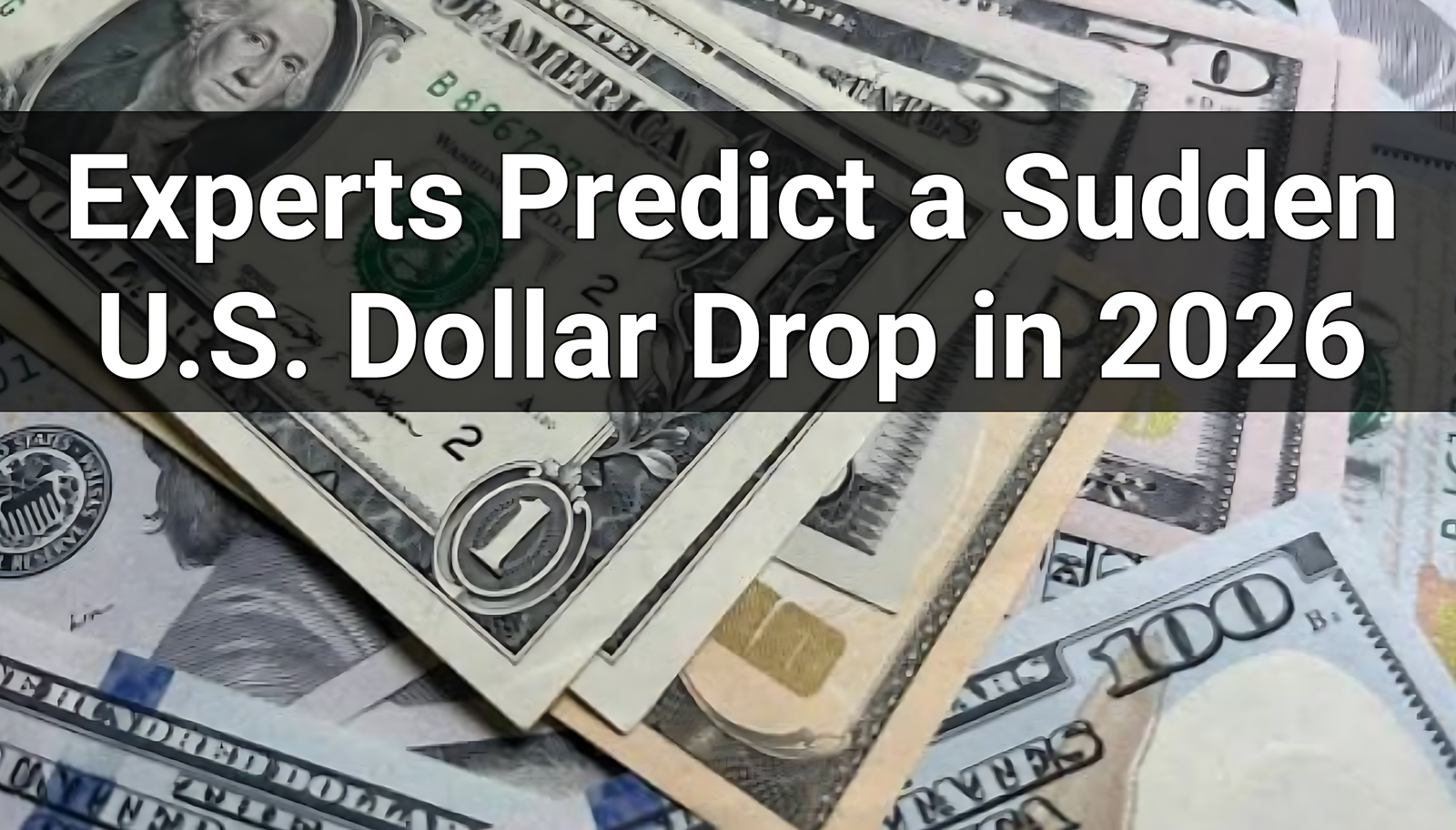
The U.S. dollar drop is currently showing some muscle, but financial experts warn this “comeback” might be a short-lived trap for investors. While the greenback clawed back losses after the nomination of Kevin Warsh as the new Fed Chair, market strategists believe rate cut bets and concerns over the Federal Reserve’s independence will soon push it back down. If you are tracking global currency shifts, understanding these hidden pressures is the key to protecting your savings this year.
Table of Contents
| Market Factor | Current Prediction for 2026 |
| Main Keyword | U.S. Dollar Forecast 2026 |
| Euro Projection (3 Months) | Steady at $1.185 level |
| USD Decline Trend | Down nearly 11% since last year |
| Fed Chair Impact | Kevin Warsh nomination caused temporary rise |
| Japanese Yen Outlook | Predicted to rise to 148/$ in one year |
| Inflation Status | Above 2% for nearly five years straight |
| Market Sentiment | Net-short positioning remains dominant |
| Official Analysis Link | Reuters Market Insights |
The Hidden Truth Behind the U.S. Dollar’s Recent Recovery
According to data from the official Reuters report and top 10 Google financial sources, the dollar’s recent “recovery” is mostly psychological. When President Trump nominated Kevin Warsh for the Fed, the market thought, “Maybe we won’t get as many rate cuts.” This thought helped the dollar gain a little value. However, the long-term reality is that the dollar has already lost about 11% of its value over the past year, and the pressure isn’t going away.
- Political Pressure: The administration is very vocal about wanting lower interest rates to boost exports.
- Inflation Sticky: Even though prices are high, the market expects at least two rate cuts this year.
- Market Doubts: Investors are worried that the Federal Reserve might lose its independence and follow political orders.
- Medium-Term Outlook: Most analysts believe the greenback will resume its downward journey by the middle of 2026.
Read More: IRS Tax Filing Dates
Why the Euro and Yen Are Gaining Strength
While the dollar is struggling to find its footing, other global currencies are looking much more stable. The Euro, for example, is expected to hold its ground. Strategists suggest that the European Central Bank (ECB) is likely to keep rates steady, which makes the Euro more attractive compared to a dollar that might see cuts.
- Euro Stability: Forecasts show the Euro hitting $1.21 against the dollar within a year.
- Yen Rebound: Despite political drama in Japan, the Yen is expected to rise by 4% soon.
- Fiscal Policy: High spending and tax cuts in other nations are creating a “choppy” environment for the USD.
- Investor Choice: Many traders are moving their money into “short” positions against the dollar.
Step-by-Step Guide to Understanding Currency Fluctuations
If you are a beginner trying to understand why your local currency or the dollar moves up and down, here is the basic process followed by market experts:
- Look at the Inflation Rate; if it’s too high, the currency usually loses value.
- Monitor Central Bank Meetings to see if they plan to hike or cut interest rates.
- Watch Political Nominations, like the Fed Chair, which can change market confidence instantly.
- Track Global Trade Deals, such as the Mercosur-China talks, which shift how money flows between countries.
- Check Technical Charts to see if the currency is “overbought” or “oversold.”
Read More: UK Dependant Visa Rules
Is the Federal Reserve Still Independent?
This is the big question everyone is asking in 2026. Usually, the Fed makes decisions based on math and data, not politics. However, with the current administration calling for lower rates constantly, many traders are getting nervous. As Alex Cohen from Bank of America mentioned, there is a risk that the Fed might dismiss inflation risks just to please the government. This loss of “credibility” is one of the biggest reasons why the dollar might fall.
How Global Events Shape Your Wallet
It’s not just about America. Events in Japan and Brazil are also playing a role. For instance, Japan is heading into national elections, and their leaders are sending mixed signals about the Yen. On the other side of the world, Brazil is looking to trade more with China.
| Country/Region | Economic Action | Impact on Dollar |
| European Union | Keeping deposit rates steady | Makes Euro stronger vs USD |
| Japan | Sunday National Elections | Causes Yen volatility |
| Brazil | Pushing for China Trade Deal | Diversifies global trade away from USD |
| India | Focus on AI and Labour charges | Affects regional investment flows |
Helpline & Contact Section for Financial Advice
If you are a trader or an individual looking for official guidance on currency exchange and regulations in Pakistan or internationally, you can use these official channels:
- State Bank of Pakistan (SBP) Helpline: 111-727-111
- Federal Reserve Public Enquiries: +1 202-452-3000
- Reuters Financial Support: Contact via their official website for data licensing.
- Tax & Investment Queries: Visit your local FBR office or registered financial consultant.
Conclusion
To wrap it up, the U.S. dollar is in a very “choppy” phase. While it might look strong for a week or two, the underlying issues like inflation and political interference are making investors run for cover. Most experts agree that by the end of 2026, the dollar will be weaker than it is today. For Pakistanis and global investors alike, keeping a close eye on the Euro and the Yen might be a smarter move than betting everything on the greenback.
Read More: U.S. Olympic gold medalist
FAQs
Why is the U.S. dollar falling if the Fed Chair is new?
The new Chair, Kevin Warsh, is seen as someone who might cut rates less. However, the overall trend of high inflation and political pressure to lower rates is stronger than any single person’s influence.
Should I buy Dollars or Euros right now?
According to the latest Reuters poll, the Euro is expected to reach $1.21 in a year, while the Dollar is expected to depreciate. Most experts suggest the Euro has a more stable outlook for the medium term.
How does the Japanese election affect me?
Japan’s election causes the Yen to fluctuate. If the Yen becomes very weak, it makes Japanese exports cheaper, which can shift global trade balances and indirectly affect the value of the Dollar.
Will inflation stay high in 2026?
Yes, inflation has been running above the 2% target for nearly five years now. This is the longest stretch of high inflation since the 1990s, which continues to put pressure on the Federal Reserve to make difficult choices.